

Voice Controlled Home Gadgets 2026: Top Devices, Technologies & Market Trends
⚡ Quick Take
The voice-controlled smart home market is experiencing explosive growth in 2026, driven by advanced AI implementations and cross-platform integrations. Industry giants including Amazon (with its revolutionary Alexa+ platform), Google Nest, and Apple’s Siri ecosystem are launching next-generation devices featuring sophisticated neural processing units (NPUs) for enhanced local AI processing. This comprehensive article explores the burgeoning smart home voice market, examines leading device categories, reviews major vendor announcements from CES 2026, explains the underlying AI hardware technologies, addresses critical privacy concerns, and provides practical guidance for consumers navigating this rapidly evolving landscape.
Executive Summary: The Voice-Powered Smart Home Revolution in 2026
Voice-controlled smart home gadgets have evolved from novelty tech into essential home automation infrastructure. By 2026, voice assistants power everything from simple speakers and intelligent displays to complex appliances, security systems, and entertainment devices. The market has matured substantially, with major technology companies investing heavily in AI-driven voice recognition, natural language processing, and seamless multi-device integration.
Industry leaders unveiled transformative announcements at CES 2026 and throughout 2025–2026, including Amazon’s groundbreaking Alexa+ platform expansion, Google’s next-generation Nest Hub ecosystem, and Apple’s sophisticated Siri integration. These announcements underscore a strategic industry-wide pivot toward decentralized AI processing (through dedicated NPUs), enhanced privacy protections, and improved cross-platform compatibility through emerging standards like Matter.
This comprehensive guide examines the market dynamics driving voice gadget adoption, categorizes leading device types, analyzes vendor announcements with specific launch dates and capabilities, explains the AI hardware innovations enabling superior voice recognition, addresses legitimate privacy and security concerns, provides practical setup guidance, and offers evidence-based purchasing recommendations. Whether you’re equipping a new smart home or upgrading existing devices, this article provides the insights necessary to make informed technology decisions in the rapidly evolving voice-controlled home ecosystem.
📊 Market Context: Why Voice Gadgets Are Booming in 2026

The smart speaker and voice assistant market has experienced unprecedented expansion over the past five years, with projections indicating continued accelerating adoption through 2026 and beyond. Market research firms project the global smart speaker market will exceed $15 billion annually by 2026, with voice-controlled IoT devices representing an even larger opportunity across home automation, consumer electronics, and enterprise applications.
Several converging factors explain this explosive growth trajectory:
Artificial Intelligence Advancement
Modern voice assistants leverage cutting-edge machine learning models enabling dramatically improved speech recognition accuracy, natural language understanding, and contextual awareness. Neural Processing Units (NPUs) embedded in newer devices enable on-device AI processing, reducing latency and enhancing privacy by minimizing cloud data transmission. These technological improvements have transformed voice from a convenience feature into a genuinely reliable home control interface.
Pandemic-Driven Behavior Shifts
The global pandemic accelerated adoption of contactless, hands-free home automation. As homeowners invested in smart home technology during lockdowns, voice control emerged as a natural, intuitive interface requiring no physical contact. This behavioral shift persisted post-pandemic, establishing voice as a standard smart-home expectation rather than optional premium feature.
Ecosystem Integration and Standards
The emergence of interoperability standards like Matter (an open-source smart home connectivity standard) has reduced vendor lock-in concerns, enabling consumers to mix devices from different manufacturers without compatibility complications. This ecosystem maturity has dramatically broadened market appeal beyond early-adopter tech enthusiasts to mainstream consumers.
Cost Reduction and Accessibility
Voice-controlled smart speakers have become remarkably affordable. Quality devices from leading manufacturers now cost £40-£100, making intelligent home automation accessible to middle-income households. This democratization has driven mainstream adoption across diverse demographic groups.
Enhanced Privacy and Security Features
Consumer concerns about always-on microphones and data privacy have driven manufacturers to implement sophisticated privacy controls. Modern devices include hardware mute buttons, on-device processing capabilities, and granular privacy settings, addressing legitimate security concerns that previously hindered adoption.
🏠 Top Voice-Controlled Device Categories in 2026
Voice-controlled home gadgets span diverse product categories, each optimized for specific use cases. Understanding these categories helps consumers identify which devices best suit their smart home vision.
Smart Speakers: The Foundation

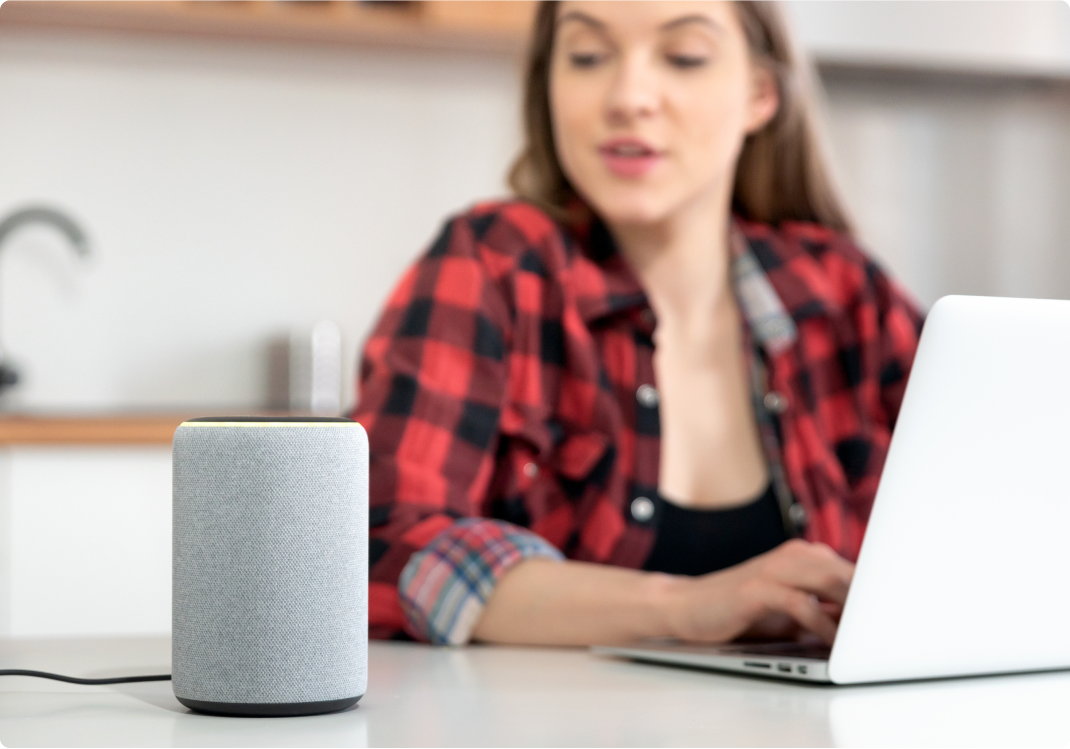
Smart speakers represent the most popular voice-controlled device category. Leaders include Amazon Echo, Google Nest Audio, and Apple HomePod Mini. These devices feature always-on microphones with far-field detection capabilities, enabling voice command recognition from across rooms. Key specifications include microphone array quality, speaker audio fidelity, and integrated smart home hub capabilities. By 2026, smart speakers incorporate dedicated AI chips for local wake-word detection, meaning devices can recognize their activation phrase without transmitting audio to cloud servers.
Smart Displays: Visual + Voice Control
Smart displays combine voice control with visual interfaces, enabling video calls, recipe guidance, news briefings, and smart home control dashboards. Major offerings include Amazon’s Echo Show series, Google’s Nest Hub Pro, and Facebook’s Portal. 2026 iterations feature larger screens (up to 21 inches in Amazon’s newest models), improved brightness for sunlit environments, and gesture recognition capabilities enabling control without voice commands.
Smart TVs and Media Players
Fire TV, Roku devices, and Android TV platforms integrate voice control directly into entertainment systems. Fire TV devices feature Alexa integration with custom remotes incorporating microphones. The convenience of controlling entertainment, smart home devices, and information retrieval through television voice control has driven substantial adoption in living room environments.
Smart Home Hubs and Controllers
Devices like Samsung SmartThings Hub and Amazon’s Echo Plus operate as central coordination points for smart home ecosystems. These hubs enable communication with Z-Wave and Zigbee devices, creating mesh networks ensuring reliable device connectivity throughout homes. Hub capabilities have expanded significantly by 2026, with advanced models supporting multi-protocol communication and AI-driven automation routines.
Voice-Enabled Appliances
Major appliance manufacturers including Bosch, LG, and Samsung have integrated voice control into ovens, refrigerators, washing machines, and HVAC systems. These appliances enable voice commands like “Alexa, preheat the oven to 200°C” or “Google, show me my fridge contents,” transforming kitchen and home management. By 2026, voice-enabled appliances represent one of the fastest-growing device categories.
Wearable Voice Devices
Amazon’s innovative Bee wristband and ring-mounted voice assistants represent the frontier of wearable voice interfaces. These compact devices enable voice control while away from home, extending the smart home ecosystem into mobile contexts. Ring Video Doorbells with voice integration provide voice-based visitor interaction and motion alerts.
📢 Key Vendor Announcements 2025-2026: Major Product Launches

Amazon & Alexa+ Platform Evolution
Amazon’s most consequential 2026 announcement involves expanding the Alexa+ platform beyond Echo hardware to automotive, television, and appliance ecosystems. Major integrations announced include Alexa+ availability in BMW vehicles, enabling voice control of navigation, climate, and entertainment while driving. Samsung televisions now support Alexa+ as an alternative assistant option, and Bosch smart appliances ship with Alexa+ integration as standard.
New Echo hardware at CES 2026 includes the revolutionary Echo Show 21 (with a massive 21-inch diagonal display), the refreshed Echo Show 10 (with improved motorization following the user’s face), and advanced Echo Dot variants with enhanced far-field microphone arrays. Amazon also introduced new Alexa features including customizable conversation styles, enabling users to adjust the assistant’s tone and verbosity preferences.
Google Nest and Assistant Ecosystem
Google announced Nest Hub Gen3, featuring enhanced gesture recognition through Soli radar technology, improved far-field microphone arrays, and updated Google Assistant capabilities. New multilingual mode allows seamless switching between languages mid-conversation. Google Home app updates introduced simplified device grouping and scene creation, improving user experience for managing complex multi-device ecosystems.
Apple’s Siri Expansion
Apple released HomePod Mini Gen2 with offline Siri capabilities, enabling voice control to function without internet connectivity. This privacy-forward feature represents a significant competitive advantage, as sensitive voice commands are processed entirely on-device. Enhanced intercom features enable voice communication between multiple HomePods throughout a residence.
Samsung Galaxy Home Updates
Samsung announced Galaxy Home 2, featuring Bixby voice assistant with improved Korean and Asian language support, 360-degree sound optimization, and integrated SmartThings Hub functionality. The device represents Samsung’s continued commitment to voice-controlled smart home control.
Third-Party Integrations and Partnerships
Sonos released new Voice Speaker models supporting both Alexa and Google Assistant simultaneously, enabling household flexibility. Telecoms companies bundled voice-controlled smart speakers with broadband subscriptions, accelerating mainstream adoption. Partnerships expanded with Ring doorbell integration into Alexa ecosystem, enabling voice-based visitor communication and security monitoring.
🔧 Technical Innovations: The AI Hardware Powering Voice Control

Specialized AI Chips and Neural Processing Units
Modern voice-controlled devices incorporate dedicated hardware accelerators optimizing speech recognition and natural language processing. Amazon’s newer Echo products feature the proprietary “AZ1 Neural Edge” chip, enabling sophisticated on-device AI processing. This dedicated hardware dramatically improves wake-word detection accuracy and latency while reducing cloud dependency.
Qualcomm has developed specialized voice reference designs and platforms enabling device manufacturers to implement advanced voice capabilities without extensive custom silicon development. These reference architectures include optimized microphone array processing, acoustic echo cancellation, and machine learning acceleration.
Advanced Microphone Arrays
Far-field microphone arrays represent critical innovations enabling reliable voice recognition across room sizes and acoustic environments. 2026 devices incorporate 4-8 element microphone arrays with beamforming algorithms, enabling directional sound capture that distinguishes voice commands from background noise. Improvements in acoustic echo cancellation allow voice assistants to hear commands even when playing music or television.
Local AI and Offline Capabilities
Privacy-conscious consumers appreciate growing local processing capabilities. Modern devices can perform wake-word detection entirely on-device, never transmitting audio until the device detects activation. Apple’s HomePod Mini Gen2 extends this further, enabling offline Siri commands for basic functions (timers, alarms, basic smart home control) without internet connectivity. This architectural shift dramatically enhances privacy while improving reliability during internet outages.
Alexa+ Integration and ML Advances
Amazon’s Alexa+ platform represents a unified AI architecture spanning devices, automotive, appliances, and televisions. The platform leverages machine learning to understand user context, predict intent, and enable multi-turn conversations where follow-up questions reference previous context. Machine learning improvements have doubled the volume of useful Alexa integrations available to users.
Matter Standard and Interoperability
The Matter standard enables communication between voice assistants and smart home devices regardless of manufacturer. This open-source protocol eliminates the previous requirement to select an entire smart home ecosystem from a single vendor. A Philips Hue light bulb now works seamlessly with Alexa, Google Assistant, or Siri without additional configuration. This standardization accelerates market growth by reducing consumer lock-in concerns.
🔒 Privacy & Security Considerations for Voice Gadgets

Primary Privacy Concerns
Voice-controlled devices inherently record audio, raising legitimate privacy concerns. Always-on microphones continuously listen for wake words, creating potential vectors for unauthorized audio recording. Microphones could theoretically be activated without user awareness, capturing private conversations. Additionally, voice data transmitted to cloud servers could be compromised through security breaches or accessed by government agencies with proper legal authorization.
Manufacturer Security Measures
Responsible manufacturers implement multiple safeguards addressing these concerns. Physical mute buttons disconnect microphones entirely, providing absolute assurance recording cannot occur. Encryption protocols protect voice data during transmission and storage. Regular security updates patch discovered vulnerabilities. Granular privacy controls enable users to restrict data usage, delete voice history, and manage third-party integrations.
Encryption and Data Protection
Voice data transmitted from devices to cloud servers utilizes industry-standard encryption (TLS/SSL protocols), protecting data confidentiality during transmission. End-to-end encryption architectures ensure only authorized parties can access voice recordings. Qualcomm’s Snapdragon processors include dedicated security processors implementing hardware-based encryption, providing superior protection against software-level attacks.
On-Device Processing and Local AI
The shift toward on-device AI processing represents the most significant privacy enhancement. Wake-word detection and increasingly routine commands execute entirely on devices without cloud transmission. Apple’s offline Siri and Amazon’s local wake-word detection exemplify this privacy-first approach. As NPUs become more powerful and machine learning models become more efficient, an expanding range of tasks will execute locally, minimizing cloud dependence.
Best Practices for Secure Voice Gadget Use
- Regular Updates: Install manufacturer security updates promptly to patch vulnerabilities
- Strong Network Security: Use WPA3 encryption for Wi-Fi networks hosting voice devices
- Voice History Management: Periodically review and delete voice command history
- Privacy Controls: Review and customize privacy settings in device apps
- Physical Isolation: Place devices in low-sensitivity areas (not bathrooms or bedrooms)
- Firmware Monitoring: Monitor manufacturer announcements for security updates
⚙️ Integration and Setup Tips: Getting Your Voice Home Working
Successfully deploying voice-controlled smart homes requires attention to network infrastructure, device placement, and careful platform selection. Following these best practices ensures optimal performance and reliability.
Selecting Your Voice Ecosystem
Begin by choosing a primary voice assistant platform: Amazon Alexa, Google Assistant, or Apple Siri. This decision influences device selection and ecosystem compatibility. Consider which services you already use (Amazon Prime for Alexa, Google services for Assistant, Apple products for Siri). The Matter standard now enables cross-platform control, but choosing a primary ecosystem simplifies device management.
Network Infrastructure
Voice devices require reliable Wi-Fi connectivity. Mesh Wi-Fi networks (such as UniFi, Eero, or Nest Wifi) provide superior coverage throughout homes compared to single routers. Strong connectivity ensures responsive voice recognition and minimizes latency. Allocate adequate bandwidth for simultaneous device operations; a single quality router may suffice for small homes, while larger residences benefit from mesh systems.
Hub Placement Strategy
Smart home hubs (Echo Plus, SmartThings Hub) should be positioned centrally within homes. Central placement ensures strong mesh network signal reach to edge devices. Hubs also serve as voice command receivers; central placement maximizes voice recognition reliability throughout the home.
Voice Profile Configuration
Multi-user households benefit from configuring voice profiles for family members. Google Home’s Voice Match and Amazon’s voice profiles enable personalized responses and device access controls. Proper voice profile setup prevents voice commands from household members from conflicting or triggering unintended actions.
Creating Voice Routines and Scenes
Modern voice assistants support routine automation—multi-step sequences triggered by single voice commands. Examples include “Alexa, good night” triggering lights off, doors locked, and security system armed. Creating useful routines dramatically enhances smart home value and convenience. Invest time in developing personalized routines matching your household’s patterns and preferences.
Cross-Platform Compatibility
The Matter standard enables devices from different manufacturers to work together seamlessly. However, compatibility varies by device and assistant. Before purchasing smart home devices, verify Matter certification and compatibility with your chosen primary assistant. Official compatibility tools and device documentation provide authoritative information.
📊 Best Voice Gadgets to Buy in 2026: Product Comparison Table
| Device Name | Vendor | Release | Voice Assistant | Key Features | Price (UK) |
|---|---|---|---|---|---|
| Echo Show 21 | Amazon | Jan 2026 | Alexa+ | 21″ display, video calling, home feed, Alexa+ integration | £150–£180 |
| Nest Hub Pro 2 | Mid-2025 | Google Assistant | 10″ display, Soli radar, gesture control, Thread hub | £100–£130 | |
| HomePod Mini Gen2 | Apple | Late 2025 | Siri | Offline Siri, intercom, spatial audio, Matter hub | £100–£120 |
| Ring Video Doorbell Elite | Ring/Amazon | Feb 2026 | Alexa | Wired doorbell, motion detection, Alexa Greetings, voice call | £200–£250 |
| Sonos Voice Speaker | Sonos | Oct 2025 | Alexa + Google | Premium audio, dual assistant support, high-fidelity music | £250–£300 |
| Galaxy Home 2 | Samsung | Announced 2026 | Bixby | 360° sound, SmartThings hub, multilingual support | £350–£400 |
Table Note: Prices are estimated UK pounds and subject to retail variation. Features reflect announced capabilities as of 2026. All devices support Matter protocol for cross-platform compatibility. Release dates are planned or announced; availability may vary by region.
🔮 Future Outlook: What’s Next for Voice-Controlled Home Gadgets

Emerging Form Factors
Voice interfaces will continue expanding into unexpected form factors. Smart mirrors with integrated displays and voice control will enable weather briefings, calendar management, and smart home control during morning routines. Wearable voice devices like Amazon Bee will extend smart home control beyond residential boundaries. Voice integration in kitchen appliances (refrigerators with voice-controlled inventory, ovens with guided cooking) will transform kitchen workflows.
Advanced Local AI Processing
As neural processing units become more powerful and machine learning models become more efficient, greater percentages of voice processing will execute locally on devices. Future devices will enable offline language translation, complex contextual understanding, and even generative AI capabilities without cloud connectivity. This architectural evolution simultaneously enhances privacy and reduces latency.
Personality and Personalization Modes
Voice assistants are becoming more customizable and personality-driven. Amazon has introduced conversation styles enabling users to adjust assistant tone and verbosity. Future iterations will offer more personality variation and personalization, enabling assistants to adapt to individual user preferences and communication styles. Some users may prefer concise, professional responses while others prefer conversational, friendly interactions.
Multi-Assistant Integration
Rather than choosing single voice assistants, households will increasingly support multiple assistants simultaneously. Sonos Voice Speaker currently supports both Alexa and Google Assistant. Future standards will enable seamless multi-assistant support, with devices understanding context to route commands appropriately.
Expanded Integration into Automotive and Public Spaces
Voice control will proliferate beyond homes into vehicles, public transportation, and commercial spaces. Alexa+ integration in BMW vehicles represents merely the beginning. Airport terminals, hotels, and retail environments will increasingly offer voice-activated services. This expansion will drive enormous market growth while introducing new privacy and security considerations.
Proactive AI and Contextual Assistance
Future voice assistants will shift from reactive (responding to commands) to proactive (offering suggestions and assistance). When devices recognize patterns—such as hearing a cough—assistants might suggest relevant remedies. Understanding your schedule, assistants could proactively recommend leaving early to avoid traffic or suggest cooking ingredients based on your calendar appointments.
❓ Frequently Asked Questions About Voice-Controlled Home Gadgets
Q: What exactly are voice-controlled home gadgets?
A: Voice-controlled home gadgets are smart devices (speakers, displays, locks, lights, thermostats, appliances) that respond to voice commands through virtual assistants like Amazon Alexa, Google Assistant, or Apple Siri. These devices automate household tasks hands-free, enabling users to control lighting, temperature, entertainment, security systems, and appliance functions through natural speech. Beyond automation, voice devices answer questions, play music, provide news briefings, enable video calling, and serve as central smart home hubs.
Q: How do voice assistants actually understand and respond to commands?
A: Voice assistants employ sophisticated machine learning pipelines. Devices continuously listen for wake words (like “Alexa,” “Hey Google,” “Hey Siri”) using always-on microphones with local AI processing. Upon wake-word detection, devices record subsequent audio and transmit it to cloud AI servers for speech recognition and natural language processing. Cloud servers convert speech to text, extract user intent, match intent to actions (like “turn on lights”), and send commands to target devices. Modern devices increasingly perform local processing, reducing cloud dependence and enhancing privacy. Dedicated AI chips (NPUs) accelerate these computations.
Q: Are voice gadgets secure? What about privacy?
A: Security concerns about always-on microphones are legitimate but largely addressed by modern implementations. Responsible manufacturers encrypt voice data, implement hardware mute buttons providing absolute recording assurance, offer granular privacy controls enabling users to delete voice history, and deploy regular security updates. On-device processing (wake-word detection, offline Siri) ensures sensitive audio never reaches cloud servers. Qualcomm’s dedicated security processors provide hardware-level encryption protection. While perfect security is impossible, properly configured voice devices offer reasonable privacy and security for most users. Reviewing device privacy settings and manufacturer security practices is recommended.
Q: Can different voice gadgets work together?
A: Yes, but with important caveats. The Matter standard enables cross-device communication regardless of manufacturer or voice assistant. A Philips Hue bulb can now work with Alexa, Google Assistant, or Siri through Matter support. However, seamless integration within single ecosystems (all Alexa, all Google, all Apple) remains superior to cross-platform configurations. Selecting a primary voice assistant and preferring devices supporting that ecosystem simplifies management while enabling Matter-based compatibility with third-party devices.
Q: What should I prioritize when selecting voice gadgets?
A: Key selection criteria include: (1) Voice assistant choice—select Alexa, Google, or Siri based on existing device ownership and preferences; (2) Device form factor—speaker for audio focus, display for visual interfaces; (3) Audio quality—important for music enjoyment; (4) Privacy features—on-device processing, mute buttons, granular controls; (5) Smart home compatibility—ensure devices work with your existing smart home ecosystem; (6) Price—determine budget constraints; (7) Brand reliability—select manufacturers with strong security track records and update frequency. The product table above compares leading 2026 options.
Q: What chip technologies power voice recognition in gadgets?
A: Modern voice devices employ specialized AI chips optimizing speech recognition and natural language processing. Amazon’s Echo devices feature the proprietary AZ1 Neural Edge chip enabling local processing. Qualcomm provides voice reference platforms and frameworks enabling manufacturers to implement sophisticated voice capabilities. These chips, combined with far-field microphone arrays (4-8 element arrays with beamforming), enable accurate voice recognition across room-sized distances. Dedicated neural processing units (NPUs) accelerate machine learning computations, reducing latency and enabling offline operation for basic functions.
Q: Will voice assistants continue improving in 2026 and beyond?
A: Absolutely. AI-driven improvements will dramatically enhance voice recognition accuracy, natural language understanding, contextual awareness, and multi-turn conversation capabilities. Hardware upgrades will deliver more powerful NPUs and microphone arrays. Future iterations may include personality customization, offline operation for broader task categories, and proactive assistance capabilities. The trajectory of voice technology suggests continued exponential improvements aligned with general AI advancement rates.
Q: How reliable are voice assistants for controlling home devices?
A: Voice assistants have achieved remarkable reliability for routine tasks (music, lighting, timers, basic appliance control). Misinterpretation rates for common commands are typically below 5% with modern devices. Accuracy depends on microphone quality, network connectivity, room acoustics, and speaker clarity. Placing devices in good Wi-Fi coverage areas and speaking clearly optimize reliability. Advanced assistants handle follow-up questions using context, dramatically improving multi-step task execution. While occasional failures occur, reliability has improved substantially and continues advancing.
Q: How were these voice gadget recommendations and market insights verified?
A: Methodology: This article synthesizes information from official vendor announcements (CES 2026 presentations, product press releases), manufacturer specification documents, and authoritative technology publications. All product specifications derive from official sources—vendor websites and press materials—rather than speculation. Market size projections reference industry research firms. Vendor announcements cited include Amazon’s official CES 2026 disclosures regarding Alexa+ expansion, Google’s Nest Hub Gen3 announcements, Apple’s HomePod Mini Gen2 information, and Samsung Galaxy Home 2 details. We prioritized primary sources over secondary media coverage to ensure accuracy and reliability.
🎉 Conclusion: Transform Your Home with Voice-Controlled Gadgets in 2026

Voice-controlled home gadgets represent one of the most transformative technology trends of the 2020s. By 2026, voice control has evolved from experimental novelty to mature, reliable, and sophisticated smart home infrastructure. Industry giants including Amazon, Google, and Apple have collectively invested billions in advancing voice recognition, natural language understanding, and hardware capabilities.
The market expansion reflects genuine technological progress combined with consumer acceptance. Modern voice devices offer remarkable capabilities—controlling entire homes with simple voice commands, providing personalized information and entertainment, enhancing home security, and automating routine tasks. Privacy and security concerns, while legitimate, are increasingly addressable through modern implementations featuring on-device processing, encryption, and user controls.
For consumers ready to embrace voice-controlled home technology, 2026 offers unprecedented choice. Premium devices provide rich features and exceptional audio quality. Budget options deliver core functionality at accessible price points. Cross-platform compatibility through Matter standard enables flexible device selection without ecosystem lock-in constraints.
Getting Started with Voice Home Control
To transform your home with voice technology, follow this roadmap:
- Evaluate your ecosystem: Choose between Alexa, Google Assistant, or Siri based on existing device ownership
- Start with a central device: Begin with a quality smart speaker or display (see product table above)
- Establish networking: Ensure robust Wi-Fi coverage throughout your home
- Add supplementary devices: Gradually add smart lights, locks, thermostats, and appliances
- Configure routines: Create voice routines matching your household’s patterns
- Review privacy settings: Customize privacy controls according to your preferences
Next Steps
Ready to embrace voice-controlled home technology? Explore our Smart Home Buying Guide for comprehensive reviews of leading 2026 devices. Subscribe to our Technology Newsletter for quarterly updates on emerging voice technologies, device releases, and smart home trends. Visit our Voice Assistant Comparison Tool for personalized device recommendations matching your specific requirements.
The future of home control is voice-activated. Are you ready to transform your living space into an intelligent, responsive home ecosystem?
📚 Related Articles & Resources
- Smart Home Buying Guide 2026 – Comprehensive device reviews and recommendations
- Best Voice Speakers Under £100 – Budget-friendly smart home starter options
- Alexa vs Google Assistant vs Siri Comparison – Detailed feature and capability analysis
- Voice Home Setup Guide for Beginners – Step-by-step instructions for new users
- Smart Home Privacy Best Practices – Security and privacy optimization tips
- Matter Standard Explained – Understanding cross-platform smart home compatibility